Welcome back to the newsletter. I have been traveling and trying to figure out new workflows for the newsletter. Doing both has proved a challenge but I do have many weeks of links that I plan to share with you in topic oriented clusters for the next few weeks every 3 days.
I (Kaliya) am coming to Europe for the Digital Identity unConference Europe DICE happening June 22-24th in Copenhagen. The event feels more important then ever to continue the spirit and working culture we have at the Internet Identity Workshop in Europe given that so many people do not want to travel. The first 1/2 day on Monday we have a great lineup of speakers to set the stage for two full days of open space technology where the attendees set the agenda.
The DICE community is converging around a pivotal moment for digital identity in Europe and beyond. The dominant concern is the practical rollout of the EUDI Wallet — not as a concept, but as a production system. Attendees want to know how implementation is going country by country, what cross-border interoperability challenges are emerging, and how to reconcile the decentralized identity vision with the increasingly centralized national and regulatory systems being deployed under eIDAS2. The EU Business Wallet has emerged as a major focus in its own right, with multiple presenters exploring commercial models, vLEI integration, machine-to-machine credential flows, and sector-specific applications in healthcare, logistics, and government — with interest extending to African business wallets as well.
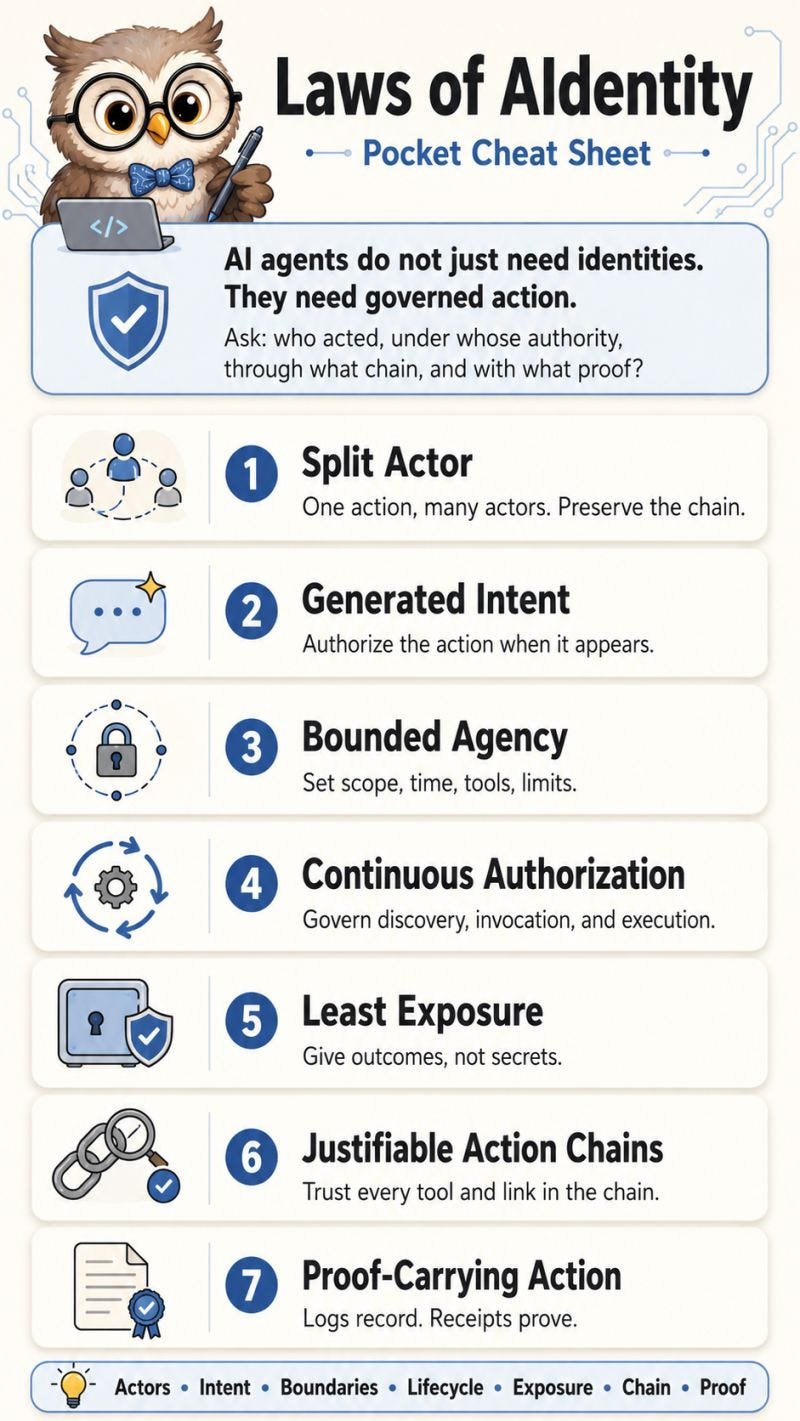
Agentic AI identity has arrived as the breakout theme. Across all three sets of responses — questions, learning interests, and planned presentations — the community is grappling with how to manage identity for AI agents through infrastructure built for humans. Key questions include how to anchor agent identities to verifiable humans (especially outside the EU), how delegated authority works, and how identity systems remain trustworthy as autonomous agents proliferate. This sits alongside broader privacy concerns: the tension between accountability and privacy, whether we really need all the data we’re collecting, and whether zero-knowledge proofs and trust graphs can work pragmatically at scale.
Underneath it all is a push from theory to practice. The community is moving past pilots and thought pieces toward production deployments, certification requirements, and real user experience. There’s impatience with “SSI washing” and a hunger for concrete answers — who is actually using DIDcomm, what are the real adoption barriers, and how do we make digital identity simpler for citizens, organizations, and relying parties alike. The gap between ideals and implementation is where DICE’s conversations will live.
I just returned from Europe where I was attending the Katapult Future Festival and the energy of doing and moving things forward on many plains of reality is palpable. Please enjoy this selection of curated links about what is happening in Europe in digital identity.
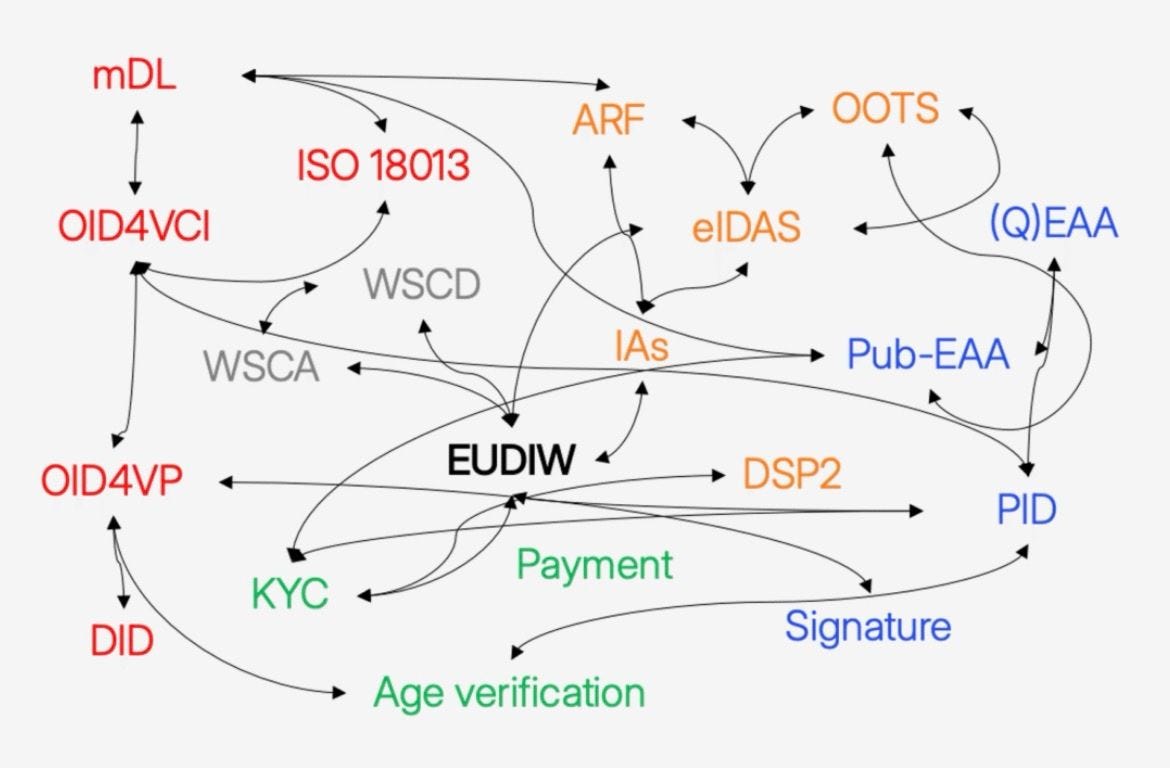
Explains how regulatory governance, cryptographic security, verifiable credentials, and interoperable protocols work together for cross-border identity in the EUDI Wallet.
Romania signed a memorandum with Mastercard as technical provider for its state-owned European Digital Identity Wallet — a significant development in how Member States are approaching wallet infrastructure.
Spain formally enacts its national digital identity legislation, joining the growing wave of Member State implementations under the eIDAS 2.0 framework.
Analyzes EU digital identity infrastructure failures, arguing regulatory frameworks lack real-world impact without operational infrastructure to back them up.
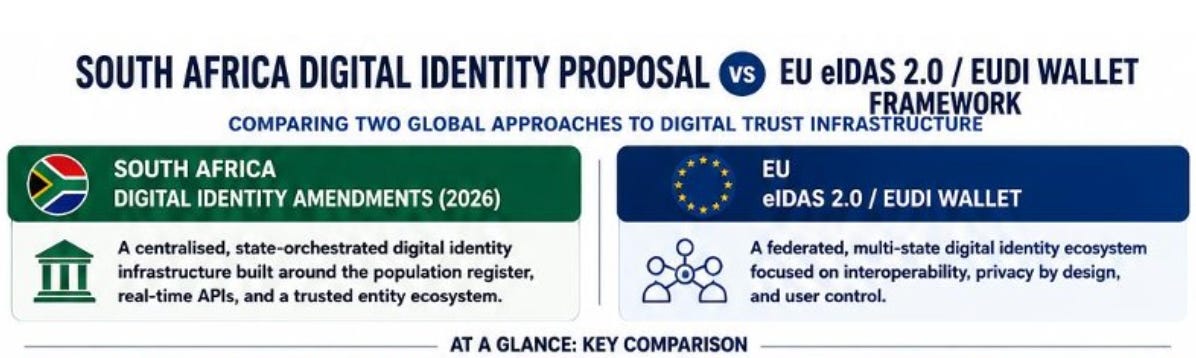
Slide Deck that compares how both systems redefine identity as programmable infrastructure through cryptographically secured credentials — a bridge between EU and African wallet ambitions.
IDura is collaborating with the IIW Team to help put on DICE. Hre are his reflections on IIW #42. Notes the field’s shift from verifiable credentials theory toward scaling, cross-border deployment, and EU digital wallet rollouts — the move from concepts to production.
Estonia publishes the first national plan putting agentic AI at the center of government operations, with €425M in projected savings and sovereign compute infrastructure by 2027.
Examines a design flaw in the EU’s proposed age verification framework where credential transferability undermines the privacy guarantees the system was meant to provide.
Policy brief arguing Europe needs decentralized digital identity governance to prevent commercial or state capture of critical identity infrastructure.
- Digital technology is now a vector of geopolitical power, shaping economic security, democratic resilience and strategic autonomy. - The EU must move beyond regulation alone: normative leadership remains a strength, but it must be matched with targeted action on critical dependencies. - Digital sovereignty should mean being “open but not powerless”: connected to global networks, while able to act autonomously when strategic interests are at stake.
Case study of how the UK’s Government Digital Service developed modular digital infrastructure across fragmented government departments — lessons for identity system builders.
Argues that trust in digital ID depends on governance structures rather than technology alone, responding to the UK’s latest consultation round. (its 28 pages)