


I turned on paid subscriptions on in Substack. The newsletter will continue to come out each week for all subscribers. Contributions are also possible on Patreon or Paypal. I accept lump sum contributions too. If you would like to do this send information to kaliya@identitywoman.net and I can send you an invoice via Stripe or via .
Upcoming
Call for Papers Open Now Open Identity Summit Deadline: January 31st, 2026
The summit takes place May 21–22, 2026 at University of Applied Sciences Dresden (HTW Dresden) in Dresden, Germany
Protocols for Publishers PfP✨ London on Feb 4-5, 2026 to discuss how we can preserve an open, equitable web, where no one company holds the keys.
MOSIP Connect, Rabat Moroco, Feb 11-13. Feb 13th is an unconference day facilitated by Kaliya. Reach out to me for an invite.
Join us at the 1EdTech Digital Credentials Summit in Philadelphia, February 18-20, 2026.
DIF Unconference Africa (an IIW Regional Event) Feb 24-26, 2026 Cape Town
Internet Identity Workshop #42, April 28-30, 2026, Mountain View California
Agentic Internet Workshop #2, May 1, 2026, Mountain View California
dice: Digital Identity unConfernece Europe, June 22-24, Copenhagen, Denmark
Hiring
(Socure) Senior Product Manager - Reusable Identity Wallet
Up First
(Jon Shamah) Reflections on International Collaboration in Digital Identity and Trust Services
I have just returned from a productive meeting at the Senate in Ottawa, Canada, where I presented a study, co-authored with my colleague Keith Jansa, and which was commissioned by the European Union and the Digital Governance Council of Canada. The focus of the study was to explore pathways for enhanced digital collaboration between the EU and Canada.
What’s a “State Endorsed Digital Identity” and Why is Utah Creating One?
Using the birth certificate paradigm as its model, Utah has asserted that each individual has a unique identity, which is not established by the state, but is inherent to the individual.
Seen on weak signals list:
- New category: Personal Algorithmic Identity passports
- Kids building portfolio identities starting age 7
Alaska Plots AI-Driven Digital Identity, Payments, and Biometric Data System
The state’s new system could turn bureaucracy into automation, and consent into a checkbox no one really controls. (Document)
Pakistan’s NANRA is into VCs
Verifiable credentials let you prove who you are without carrying physical documents. Whether you are pplying for a service, sharing qualifications, or confirming your identity, your credentials are digitally secure, instantly verifiable, and fully in your control.
(Dave Birch) Thinking About a UK Digital Identity Infrastructure
even if you are one of three million people who signed a petition against having a digital identity card, the fact is that a modern society needs a digital identity infrastructure. In my view, the public debate itself needs to change: It should no longer be about whether people should be made to carry a card or not!
mDL
(Biometric Update) NIST announces new mDL use case, resources to support financial sector adoption
NIST’s response is a document called “Building Assurance in the mDL ecosystem,” which Galuzzo says focuses on three core components. “One was enrollment into the system of record. How do we understand what degree of vetting and proofing went into the issuance of that original polycarbonate plastic, whatever kind of physical ID was involved in the actual process of being provisioned to the DMV.”
DHS Says REAL ID, Which DHS Certifies, Is Too Unreliable To Confirm U.S. Citizenship
In a December 11 court filing, Philip Lavoie, the acting assistant special agent in charge of DHS’ Mobile, Alabama, office, stated that, “REAL ID can be unreliable to confirm U.S. citizenship.”
In a court filing in response to DHS, the Institute for Justice noted how incredible this position is. “REAL IDs require proof of citizenship or lawful status,”
Age Verification
Building trust into online age verification
As the UK moves to enforce online age verification under the Online Safety Act, protecting children must not come at the cost of privacy or digital trust. To succeed, age checks need to be privacy-preserving by design, giving users confidence that safety, security and personal data rights can coexist online, says Richard Hall, AVP at DigiCert.
EU Age Verification Manual
The age verification use case allows EU citizens to prove they are above a specific age threshold (e.g., over 16, 18, or 21) using a verifiable digital credential stored in their EUDI Wallet. The wallet enables selective disclosure: confirming age without revealing full birthdate or other identifying information. It is more secure than sharing a passport or national ID as less identifying data is shared.
This use case manual explains in practical terms how the age verification will work with EU Digital Identity Wallets. It also provides links to relevant technical and legal resources. (Blueprint)
AI and Identity
(Dyne.org) How we will delegate bureaucracy to AI
The future of identification technologies will involve delegating tasks to automated agents. Between the decentralised dream and the password asphyxiation, a third actor is emerging: the automatic intermediary.
AI Agents and VCs there are Issues
I’ve seen multiple articles and companies trying to position verifiable credentials as the foundation for identity in the age of AI agents. But there is a fundamental flaw here.
5 Trends to drive the AI ROI in 2026: Trust is Capital
Strategic shift: trustworthy AI infrastructure is becoming a business advantage rather than a compliance burden.
By strengthening Integrity (the technical and ethical bedrock), mastering Data quality and sovereignty, insisting on Information transparency, cultivating verifiable Knowledge networks, and enforcing wise Governance at the top, organizations create a virtuous cycle.
Gartner highlights Indicio as a leader in decentralized identity for AI and machines
(Evin McMullen, Billions) Your Identity Is Your Most Valuable Asset; It’s About To Become Income, Too
Identity is the single most valuable digital asset. We need systems that allow users to capture that value rather than cede it to intermediaries who view personal data as their property. Now that the technology is readily available, self-sovereign identity will serve as the foundation of trust necessary for the next generation of digital services, one that compensates users for verified credentials rather than exploiting them.
Why Protecting Human Identity Matters in the Age of AI
Universal Digital Identity: Secure, interoperable, privacy-enhancing digital ID systems encompassing individuals, organizations, and autonomous entities.
(Okta) Verifiable Credentials Counter AI-Driven Identity Fraud
Year Review - Year Ahead
(Heather Flanagan) ICYMI 2025: What You All Read the Most This Year
AI isn’t a feature anymore — it’s a structural change.
Governance beat technology as the real bottleneck.
Definitions matter. A lot.
Identity is expanding to new kinds of actors.
Interoperability is the quiet throughline.
Will Big Tech Win the EUDI Wallet Race?
2025 in Review: cheqd’s Year of Building Trust, Identity, and Verifiable AI
Maturing ID wallets, investment for compliance and confidential AI -- privacy predictions for 2026
Are Digital Credentials Replacing Degrees? trends for 2025-2030
Thoughtful
2026 Predictions: What Comes Next in Fraud, Cybersecurity, and Identity
(Doc Searls) When Branding Means Relating
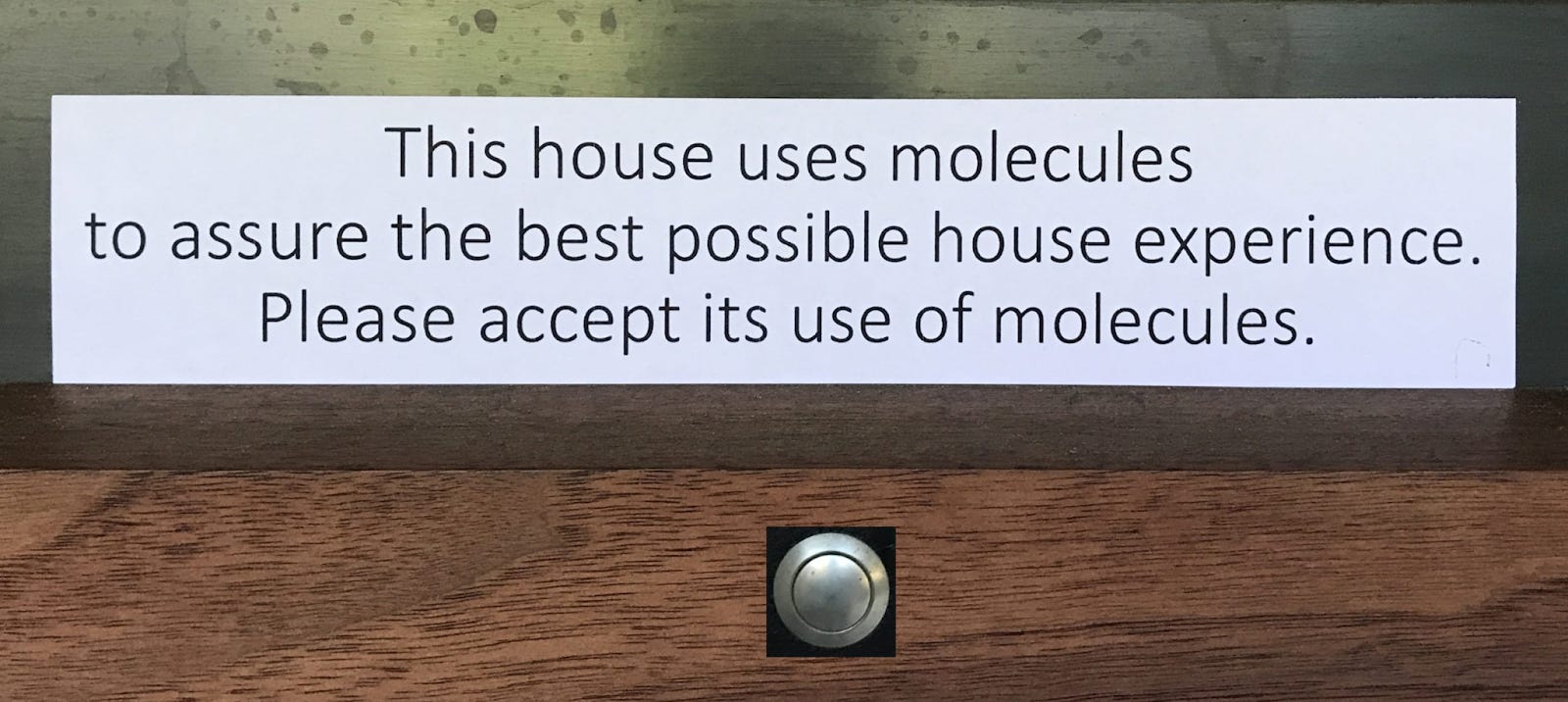
(Doc Searls) Writings on the Failings of Notice & Consent
Research
(Research) Self-Sovereign Identity a Catalyst for Secure and Efficient Employee Onboarding and Management
This paper examines how self-sovereign identity (SSI) technology can transform employee identity verification. It highlights the benefits of SSI such as simplified processes, enhanced security, employee empowerment and cost savings. The paper analyses the strategic advantages of adopting SSI, including leadership positioning, talent acquisition and retention, efficiency gains and data security compliance. Finally, the paper delves into the implementation of SSI and its future potential in the world of digital identity.
(Research) Self-Sovereign Identity for Verifiable Authorship Consent and Privacy-Preserving Conflict-of-Interest Screening in Academic Publishing: A Permissioned Blockchain Registry Approach
This paper proposes a decentralized framework using Self-Sovereign Identity technologies (DIDs and Verifiable Credentials) to address ethical gaps in academic publishing by enabling explicit authorship consent verification, accurate contributor role documentation, and privacy-preserving conflict-of-interest detection—backed by stakeholder survey support and positioned as a design contribution toward future implementation.
Business Wallets
EU Business Wallet: What You Need to Know About the EU’s Digital ID for Companies [Video and Takeaways]
Business Wallets and Organizational Identity: What the EWC Pilots Revealed
The importance of the Sea Change with European Business Wallets cannot be overstated
(Good4Work) The Rise of Decentralized Identity in Workforce Recognition
For employers, HR leaders, and platforms ready to lead in the next era of talent, embracing DIDs is a new way to engage with potential employees.
Protocols and Standards
OpenID and ISO announce Collaboration
A event: Gail Hodges (OpenID Foundation ) and Loffie Jordan (ISO - International Organization for Standardization ) are launching a joint group to work on harmonising digital credential protocols and avoiding fragmentation. A great step forward – well done! 🎉
New Thinking: Proof of Continuity changes the question: not “who holds this?” → “can this authority validly continue?”
DIDs solved identification.
VCs improved claims.
PoC solves authority.
Provenance Identity Continuity (PIC) Model Specification
(Heather Flanagan) Web Payments and Digital Identity Standards Are Converging – #TIL
AuthZEN shows enterprise readiness at Gartner IAM Summit
The main AuthZEN session drew nearly 100 attendees whose questions revealed an important shift in market maturity. Rather than asking whether standards based authorization works, practitioners wanted to understand implementation specifics for their own environments - a clear indication that AuthZEN has moved from concept to viable technology.